
By Arran Turner, Founder of Sorbus Finance
If you’re running a construction business, you already know the frustration I’m talking about. You’ve done the work. Your team has been on site, the materials are in, the job is done — and now you’re sitting there watching the clock tick down on a 60 or 90-day payment term, wondering how you’re going to pay your subbies next week. In this blog, we’re covering construction finance specifically and how company’s can increase sustainability.
I speak to construction business owners almost every day, and this is one of the most common challenges they bring to me. Not lack of work. Not even lack of ambition. It’s cash flow — specifically, the painful gap between completing a job and actually seeing the money land in your account.
That gap doesn’t just cause stress. It actively holds your business back.
Why Construction Businesses Struggle with Cash Flow More Than Most
The construction sector has some of the most complex payment structures of any industry in the UK. You’re often dealing with staged payments, milestone invoices, retentions, “pay when paid” clauses, and main contractors who take their time settling up. On top of that, materials need to be ordered upfront, subcontractors need to be paid on time to keep relationships intact, and you need to be in a position to tender for the next project while you’re still waiting on payment for the last one.
It’s a juggling act that most business owners in other industries simply wouldn’t recognise. And when you’re managing all of that from one bank account, the margins for error are razor thin.
The VAT domestic reverse charge, introduced for CIS-registered businesses, has only added another layer of complexity. Where some firms previously used VAT receipts as a short-term cash flow buffer, that option is largely gone. The pressure hasn’t eased — it’s increased.
This is why so many construction businesses find themselves in a cycle: busy with work, but constantly chasing cash.
What is Construction Finance, and How Does It Work?
Construction invoice finance — sometimes called construction factoring — is a funding solution that allows you to unlock the cash tied up in your unpaid invoices, without waiting for your clients to pay.
Here’s the simple version of how it works:
- You raise an invoice (or a payment application) and submit it to the finance provider alongside your customer.
- Within 24 hours, you receive up to 95% of the invoice value directly into your account.
- When your customer pays — whether that’s in 30, 60, or 90 days — the remaining balance is released to you, minus a small fee.
That’s it. No waiting. No chasing. No juggling.
For construction businesses in particular, this can be transformative. Rather than hoping your cash flow holds out until a client decides to pay, you have working capital available the moment you raise the invoice. That means you can pay your subcontractors on time, order materials for the next phase of a project, and take on new work with confidence — rather than turning down opportunities because your cash is tied up elsewhere.
Invoice Discounting vs Invoice Factoring: What’s the Difference?
This is something I get asked about regularly, so it’s worth clarifying.
Invoice discounting is confidential. You retain full control of your credit control process — your clients never know a finance facility is in place. Funds are advanced against your invoices, and you continue to collect payments as normal. This tends to suit more established construction businesses with their own finance function in place.
Invoice factoring works slightly differently. The lender takes on the credit control responsibility, chasing payments on your behalf. Your clients will know a third party is involved, but in return, you free up a significant amount of your own time and resource. For smaller construction firms or those going through a period of rapid growth, this can be a real advantage.
Neither option is inherently better — it depends entirely on your business, your client relationships, and what you actually need. That’s why I always take the time to understand a business properly before recommending anything. To understand this further, you can download our Free Guide To Invoice Finance
“But I’ve Been Told Construction is Too Risky to Finance”
I hear this a lot, and it genuinely frustrates me — because it’s simply not accurate. Yes, some traditional high street lenders are cautious around construction. They don’t always understand the sector’s payment structures, and they can be put off by the complexity of contract terms or the perceived volatility of the industry.
But there are specialist lenders who understand construction inside out. At Sorbus Finance, we work with a panel of over 100 lenders, including names like Bibby Financial Services, 4Syte, and Lloyds Bank’s dedicated commercial finance teams — all of whom have real experience in this sector.
If you’ve been told no by a bank, or assumed that finance isn’t available to you, I’d encourage you to have a conversation before writing it off. Being turned down by one lender is not the same as being ineligible. It just means you haven’t found the right lender yet.
Beyond Invoices: Finance for Materials, Labour, and Equipment
Invoice finance is often the starting point, but it’s rarely the only solution construction businesses need. At Sorbus Finance, we can also support with:
Materials finance — Pre-funding the purchase of materials before a project begins, so you’re not out of pocket before a single invoice has been raised.
Labour finance — Helping you cover wage bills and subcontractor payments without putting pressure on your cash flow.
Equipment and asset finance — Spreading the cost of plant, machinery, or vehicles over time, rather than tying up large amounts of capital in a single purchase.
The goal is always the same: to keep your projects moving, without cash flow becoming the limiting factor on what your business can achieve.
Frequently Asked Questions About Construction Invoice Finance
Can I apply for construction invoice finance if I have a poor credit rating? Yes — many lenders in the construction space assess the creditworthiness of your debtors (your clients) rather than your own credit history. This makes invoice finance accessible to businesses that might not qualify for traditional lending.
How quickly can I access funds? In most cases, once a facility is in place, funds can be accessed within 24 hours of raising an invoice. Setting up the initial facility typically takes a matter of days, not weeks.
Will my clients know I’m using invoice finance? This depends on the type of facility you choose. With invoice discounting, the arrangement is completely confidential. With factoring, your clients will be aware — though this is increasingly common and well understood in the construction sector.
What size of business is construction invoice finance suitable for? Invoice finance is available to a wide range of businesses, from growing subcontractors turning over a few hundred thousand pounds annually, to large main contractors with multi-million pound ledgers. The key is finding the right lender and the right structure for your specific situation.
How much does it cost? Fees vary depending on the lender, your turnover, and your debtor book. Typically, you’ll pay a service fee and interest on the funds advanced. I always make sure clients understand the full cost before committing to anything — no surprises.
A Straightforward Conversation Can Change a Lot
One of the things I set out to do when I founded Sorbus Finance was to make finance genuinely accessible to business owners who felt the system wasn’t designed for them. Construction is a prime example of that. It’s an industry that contributes around £117 billion annually to the UK economy and supports over 2 million jobs — and yet so many of the businesses within it are operating with one hand tied behind their back because of avoidable cash flow problems.
If your money is consistently tied up in unpaid invoices, if you’re turning down work because you’re not sure the cash will be there to deliver it, or if you’re finding it hard to grow because you’re too busy firefighting financially — please don’t sit on that. Have a conversation.
There are solutions available, and more often than not, they’re simpler and more accessible than people expect.
Ready to explore your options? Get in touch with the team at Sorbus Finance for an honest, no-obligation conversation about how we can help your construction business access the working capital it needs.
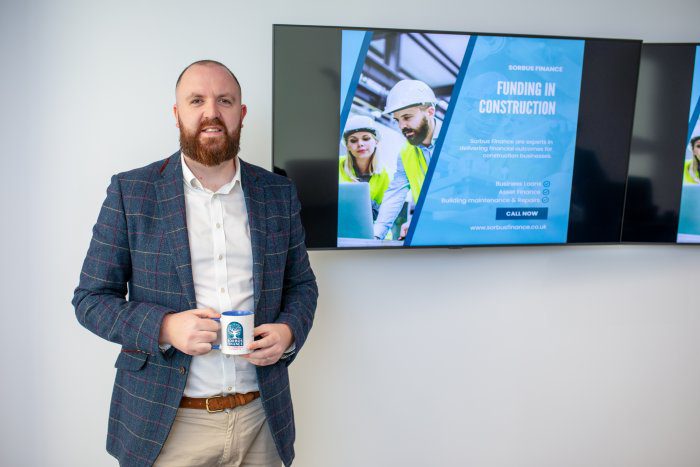
Arran Turner is the founder of Sorbus Finance, an independent commercial finance brokerage based in Chesterfield, Derbyshire. Sorbus Finance is an Appointed Representative of Moorgate Finance Limited T/A MBN, which is Authorised and Regulated by the Financial Conduct Authority (FRN: 662419).