Why every UK SME needs a Business Finance Health Check before applying for finance
A business finance health check before you apply can be the difference between approval and rejection. Here is what it covers, why it matters, and how to get one done properly.
Written by Sorbus Finance
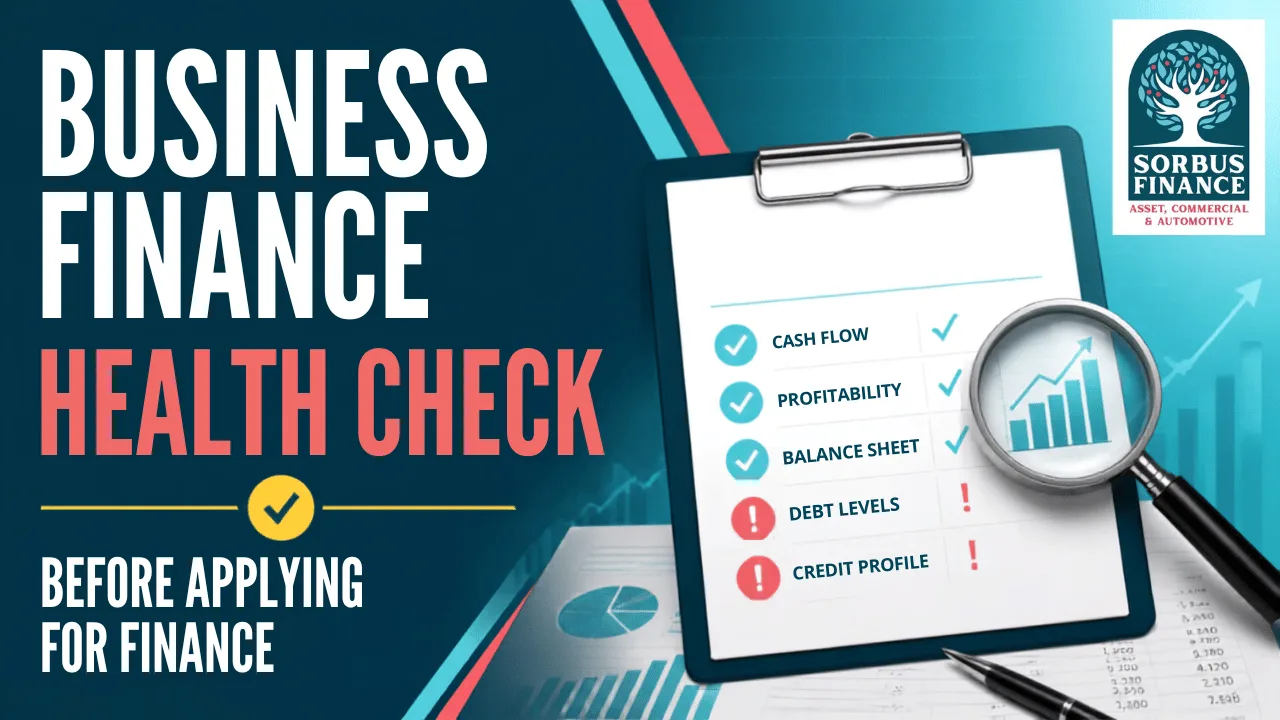
What is a business finance health check?
A business finance health check is a structured review of your business's financial position, credit profile, and documentation, carried out before you approach a lender, to identify anything that would weaken an application and fix it in advance. Think of it as due diligence on yourself, done by someone who knows exactly what a lender's underwriter will be looking at.
It covers your filed accounts and management figures, your business and personal credit files, existing borrowing and how it is structured, cash flow trends, and the specific asset or facility you are looking to fund. Done properly, it tells you not just whether you will be approved, but which lenders are the right fit and what rate you should realistically expect.
Why this matters more than most SMEs realise
The lending environment for UK small businesses is tougher than it used to be, and the numbers back this up. Government figures show overall loan success rates for firms applying for bank finance in the UK sit below 50% on average, a marked fall from around 67% approval rates before the pandemic. Confidence has fallen just as sharply: only 34% of SMEs planning to apply for new or renewed finance are confident their bank will agree to it, down from 56% in 2019.
Here is the detail that matters most for anyone reading this before an application. That same government analysis found that existing borrowers and businesses applying for leasing or hire purchase enjoy success rates of around 80%, well above the average for unsecured bank finance, because the lender has legal ownership of the asset as collateral. In other words, how you structure and present a funding request has a direct, measurable effect on whether it gets approved, and asset-backed finance already starts from a stronger position than an unsecured loan application.
A health check is what closes that gap further. It catches the things that turn an 80% chance into an automatic decline, before a lender ever sees the application.
What actually gets rejected, and why
In my experience, the reasons behind a declined application are rarely about the underlying business being unviable. The recurring issues are:
Accounts that are late, inconsistent, or don't reflect current trading. A lender working from figures that are eighteen months old, or that show a dip without context, will assume the worst rather than ask.
An unexplained credit blip. A missed payment or a County Court Judgment sitting on file with no accompanying explanation reads as a red flag, even when there was a straightforward, resolvable reason behind it.
Undisclosed existing borrowing. Facilities that don't show up until a credit search reveals them look like something being hidden, even when there was no intent to conceal anything.
Applying to the wrong lender for the sector or asset. Some lenders simply will not touch certain sectors, asset ages, or deal sizes. Applying anyway wastes time and adds a hard search to your file for nothing.
Multiple applications submitted in a short window. Each declined application leaves a mark. Several in quick succession make the next lender more cautious, not less.
None of these reflect whether the business can genuinely afford the finance. They reflect presentation, timing, and lender fit, all of which a health check is designed to catch before you apply, not after you have been declined.
What a proper health check covers
At Sorbus Finance, a business finance health check before any application looks at:
Filed accounts and management information – checking they are current, consistent, and tell the story a lender needs to see
Business and director credit files – identifying anything that needs an explanation prepared in advance, rather than discovered by an underwriter
Existing facilities and liabilities – making sure nothing is misrepresented or omitted, and understanding how new borrowing sits alongside what is already in place
Cash flow and affordability – stress-testing whether the business genuinely supports the new repayment, not just whether it looks affordable on paper
The specific asset or facility required – matching the request to lenders who are active in that sector, asset type, and deal size
Deal structure – deposit, term, and any balloon payment, to present the strongest possible case at the right monthly cost
The output is not just a yes or no. It is a clear view of which lenders to approach, in what order, and what to fix first if anything needs addressing before you apply at all.
The cost of skipping it
Every declined application leaves a footprint. A hard credit search shows on your file regardless of the outcome, and repeated declines across different lenders in a short space of time make every subsequent application harder, not easier, because underwriters see the pattern. Businesses that go in unprepared often end up accepting a worse rate from a lender who will take the deal, rather than the best rate from a lender who would have approved it with the right presentation.
A health check, by contrast, costs nothing at Sorbus Finance and takes a fraction of the time a declined application and a second attempt would cost you.
When should you get a business finance health check done?
Ideally, before every material finance application, not just the first one. Circumstances change. A business that was in a strong position for its last facility eighteen months ago may have taken on new borrowing, had a quiet trading quarter, or picked up a credit marker since, all things worth knowing before you apply again rather than after a decline.
As a general rule, get one done:
Before applying for any new asset finance, loan, or credit facility
Before renewing or extending an existing facility
At least annually, even with no immediate application planned, so you know where you stand
Is a business finance health check only for businesses that expect to be declined? No. Even strong, well-run businesses benefit, because it identifies the best-fit lender and structure rather than the first one that says yes.
Get your business finance health check with Sorbus Finance
Before you apply anywhere, talk to the team at Sorbus Finance. We will review your position, tell you honestly where you stand, and make sure the first application you submit is the right one.
Ready to act on what you've read?
Get a free, no-obligation quote from 100+ UK lenders
Ready to find the right finance for your business?
Our independent advisers compare 100+ UK lenders to find the deal that fits your business, no upfront fees, no obligation.