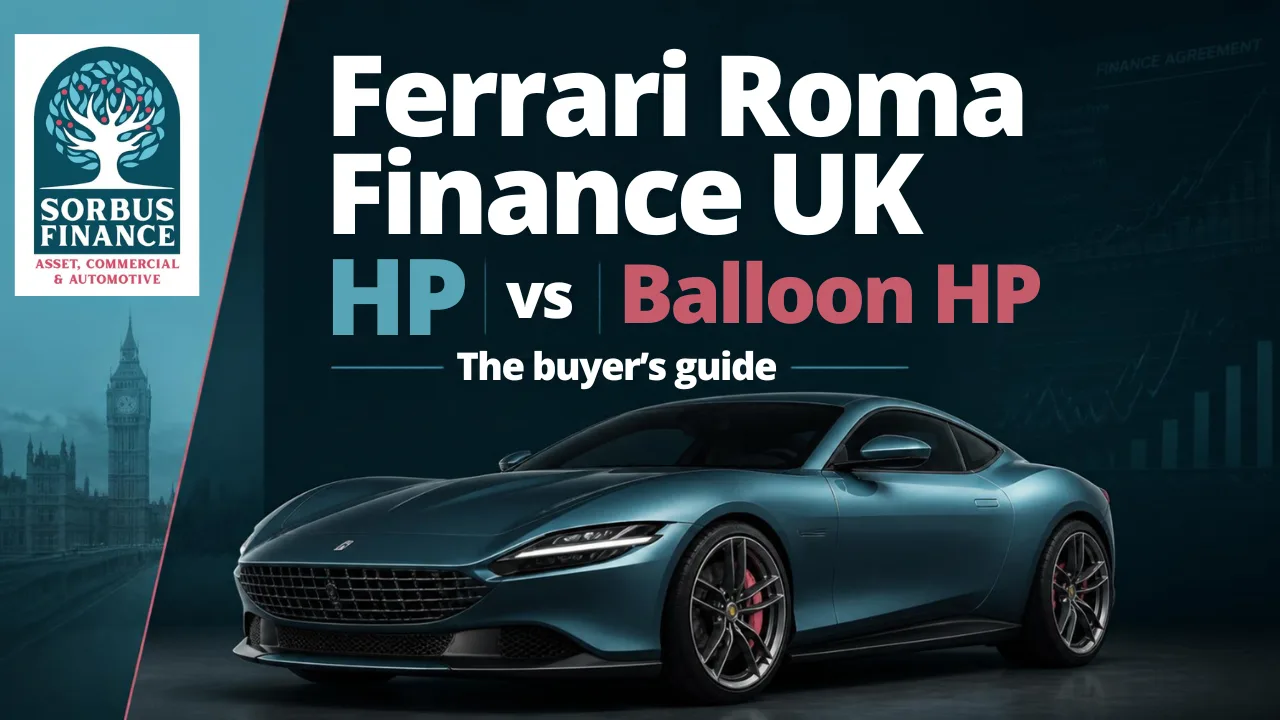
Ferrari Roma Finance UK: HP vs Balloon HP
A clear guide to Ferrari Roma finance in the UK, how hire purchase and balloon HP compare, what deposit and terms to expect, and how the Roma's GT positioning affects your options.
Why the Ferrari Roma Sits Differently in the Finance Market
The Roma occupies a distinct position in the Ferrari range. Where the F8 or SF90 lean into outright performance, the Roma is Ferrari's grand tourer, a front-engine 2+2 built for covering distance in comfort as much as for outright pace. That positioning matters when it comes to finance, because lenders assess residual value partly on how a car is actually used and who tends to buy it.
Roma buyers are often purchasing a car they intend to drive regularly rather than keep as a garage piece, and this usage pattern, combined with the model's relatively strong production numbers compared to limited-run specials, tends to support more predictable, well-understood residual values. That predictability is exactly what makes structures like balloon HP work well for this model.
Hire Purchase vs Balloon HP: The Core Difference
Hire Purchase (HP) is the straightforward route: deposit, fixed monthly payments, and you own the Roma outright at the end of the term. No final lump sum, no decision point, just a clear path from deposit to ownership. This suits buyers who want certainty and intend to keep the car well beyond the finance term.
Balloon HP works similarly but defers part of the car's value to the end of the agreement as a final "balloon" payment. Because you're financing less of the car's value across the monthly term, your payments are meaningfully lower, but you're left with a decision at the end: pay the balloon and keep the Roma, refinance it, or sell/part-exchange to cover it.
Unlike PCP, balloon HP doesn't come with a guaranteed hand-back option, the balloon is a genuine debt you need to settle one way or another. For a car with solid residuals like the Roma, this is usually manageable, since the car's market value at the end of the term is generally expected to cover or exceed the balloon figure. But it's a structure that rewards buyers who have a plan for the end of the term, rather than assuming it'll sort itself out.
Choosing Between the Two for a Roma
HP tends to suit buyers who:
See the Roma as a long-term car, not a stepping stone to the next model
Want a clean ownership outcome with no final payment to plan around
Are financing through a limited company and want straightforward balance sheet treatment
Would rather pay slightly more monthly in exchange for zero uncertainty later
Balloon HP tends to suit buyers who:
Want the lowest achievable monthly payment for a given specification
Are comfortable planning ahead for the balloon, whether that means paying it, refinancing, or selling
Value keeping capital free for other purposes during the finance term
May want to change cars again within the Ferrari range once the term ends
There's no wrong answer here — it's a genuine trade-off between certainty and flexibility, and the right choice depends on how you see your relationship with the car playing out over the next few years.
What Deposit, Term and Cost Look Like
Every deal is specification and lender-dependent, but the general shape of Ferrari finance at this level is fairly consistent:
Deposit: typically 10–25% of the car's value
Term: most commonly 24–60 months
Structures available: hire purchase, balloon HP, and finance lease for business purchases
The Roma typically sits toward the lower end of current Ferrari model pricing once specified, which for some buyers makes it a more accessible entry point into Ferrari ownership than the mid-engined range, worth factoring in if you're weighing the Roma against another model partly on finance grounds. A specialist broker can talk through indicative monthly figures for your specific configuration well before you commit to anything.
New vs Pre-Owned Roma Finance
Both new and pre-owned Roma purchases can be financed on HP or balloon HP terms, whether the car is coming from an official Ferrari dealer, an independent specialist, or a private seller. Pre-owned Roma finance is worth particular attention here, because the model hasn't been in production as long as some other Ferraris, the used market is still relatively young, and lenders are generally well-positioned to assess residuals confidently across most ages and mileages currently available.
Financing a Roma Through Your Business
As with other prestige vehicles at this price point, a meaningful number of Roma buyers are company directors or business owners financing through a limited company. The right structure here, hire purchase versus finance lease, in particular, depends on factors like how the car will be used, capital allowance treatment, and any benefit-in-kind considerations if there's personal use involved.
This is genuinely a case where the right answer is specific to your company's circumstances, so it's worth having a conversation with your accountant alongside your finance broker rather than assuming any one structure applies universally.
Getting the Right Deal on a Roma
A few things that consistently make a difference:
Specify precisely before you enquire. Year, mileage, options, and provenance all affect how a lender assesses the deal, a vague enquiry gets a vague, and usually less competitive, quote.
Look beyond manufacturer finance. Ferrari Financial Services is a reasonable starting point, but independent lenders often match or beat those terms, particularly on pre-owned stock.
Settle on HP or balloon HP before comparing quotes. Deciding your preferred structure first means you're comparing genuinely equivalent offers.
Think through the balloon exit plan if you go that route. Know roughly how you'd cover the final payment, sale, refinance, or settlement, before you sign anything.
In Summary
Financing a Ferrari Roma comes down to a similar core choice as most prestige vehicle finance: hire purchase for certainty and long-term ownership, or balloon HP for lower monthly payments with a plan for the end of the term. The Roma's strong, well-understood residuals make balloon structures a genuinely sound option here, but the right fit still depends on how you intend to use and eventually part with the car.
If you're ready to see real figures for your specific Roma, our Ferrari Finance specialists compare hire purchase and balloon HP across our full lender panel to find the structure that suits your situation, whether buying privately, from a dealer, or through your business.
For more guides like this, visit our full library of finance guides.
This article is for general information only and does not constitute regulated financial advice. For guidance specific to your circumstances, speak to one of our advisers.
FAQ SCHEMA
Q1: What's the difference between HP and balloon HP for a Ferrari Roma?
Hire purchase involves fixed monthly payments with no final lump sum, and you own the car outright at the end. Balloon HP lowers your monthly payments by deferring part of the car's value to a final balloon payment, which you then pay, refinance, or cover through sale or part-exchange.
Q2: What deposit is typically needed to finance a Ferrari Roma?
Deposits generally range from 10–25% of the car's value, depending on the lender and your financial profile. A higher deposit reduces monthly payments and total interest but ties up more capital upfront.
Q3: Can I finance a pre-owned Ferrari Roma?
Yes, both hire purchase and balloon HP are available for pre-owned Roma purchases from dealers, specialists, or private sellers, subject to standard checks on the vehicle's age, mileage, and condition.
Q4: Is balloon HP riskier than PCP for a Ferrari Roma?
Balloon HP doesn't include the guaranteed hand-back option that PCP offers, so you're committed to settling the final balloon payment one way or another. However, the Roma's relatively strong and well-understood residual values generally support this structure well, provided you have a clear plan for the end of the term.
Q5: Can I finance a Ferrari Roma through my limited company?
Yes, hire purchase and finance lease structures can both be arranged for business purchases. The most tax-efficient option depends on your company's circumstances, so it's worth discussing with your accountant alongside your finance broker.
Ready to act on what you've read?
Get a free, no-obligation quote from 100+ UK lenders
Ready to find the right finance for your business?
Our independent advisers compare 100+ UK lenders to find the deal that fits your business, no upfront fees, no obligation.