Hire Purchase vs Finance Lease vs Contract Hire: Financing a Rental Fleet
Comparing Hire Purchase, Finance Lease and Contract Hire for a car rental or self-hire fleet? Here's how each structure affects ownership, VAT and cash flow.
Written by Sorbus Finance
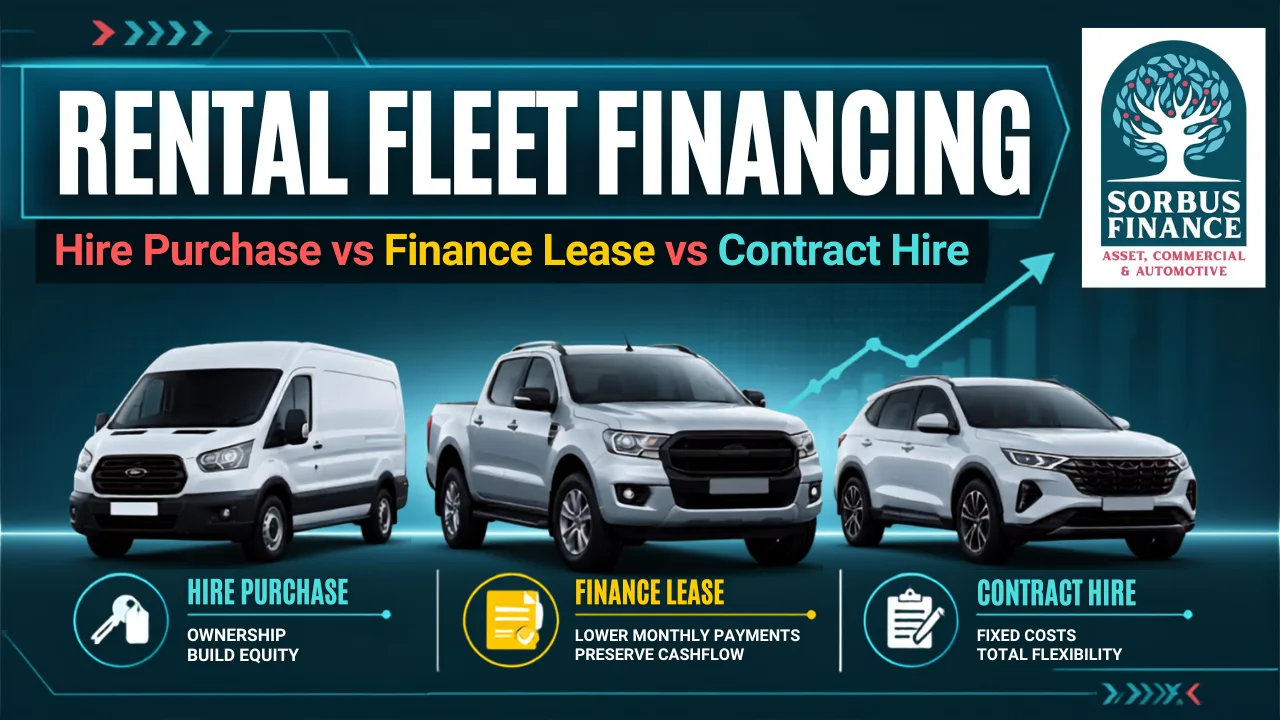
Financing a Rental Fleet Is a Different Problem to Financing One Van
Most guides to vehicle finance are written for a business buying one or two vehicles for internal use. A car rental or self-hire operator is solving a different problem: you need a fleet that generates income by being hired out, one that needs to turn over every few years to stay attractive to customers, and one where the finance structure directly affects your margin on every single rental.
Business demand already dominates this market. BVRLA figures show business customers account for 67% of car rental volumes and 84% of LCV rental, with work-related bookings now ahead of leisure hire. That's a lot of vehicles doing a lot of work, and the finance structure behind them needs to earn its keep.
There are three structures that come up repeatedly when rental operators talk to us: hire purchase, finance lease, and contract hire. Each suits a different kind of fleet.
What's the Difference Between Hire Purchase and Finance Lease?
Hire purchase (HP) means you're buying the vehicle in instalments and you own it outright once the final payment clears. The vehicle sits on your balance sheet as an asset from day one, you can claim capital allowances against it, and you carry the risk (and reward) of whatever it's worth when you eventually sell it.
Finance lease works differently. You don't own the vehicle; you rent it for an agreed term, with payments structured around its expected depreciation, and at the end you either return it, extend the lease, or sell it on the lessor's behalf and keep a share of the proceeds (a "secondary rental" or balloon-type arrangement). It keeps monthly outlay lower because you're not paying off the whole asset value, only the portion it's expected to lose.
For a rental fleet, the practical question is usually: do you want to own the metal, or do you want predictable costs and flexibility to refresh the fleet?
Is Contract Hire Suitable for a Self-Drive Hire Business?
Contract hire is a step further again, it can include a fully maintained rental from the finance provider, often bundling servicing, tyres and breakdown cover into one monthly figure. It's popular with businesses that want zero exposure to residual values and no involvement in disposing of vehicles at the end of term.
For a self-drive hire operator, contract hire can work well for a portion of the fleet, particularly popular models where utilisation is high and you'd rather a fixed cost than the admin of managing your own servicing schedule across dozens of vehicles. Where it's less suited is if your business model depends on holding vehicles longer than a standard contract term, or if you regularly convert or brand vehicles in ways a leasing company won't allow. It is also worth noting that contract hire vehicles are often exposed to greater end of term damage charges and inspections.
Which Structure Gives You the Most Flexibility to Scale?
This is usually the deciding factor for growing rental businesses. HP gives you an asset you can eventually use as security or sell at will, but ties up more cash per vehicle early on and leaves you carrying residual value risk across a whole fleet. A real concern given that BVRLA has flagged rampant EV depreciation as one of the pressures squeezing margins across the leasing sector even as leased vehicle volumes grew 8% year on year.
Finance lease and contract hire can spread that risk to the finance provider, which is often the more sensible choice for operators who want to add or refresh vehicles regularly rather than hold the same fleet for years. The trade-off is that you don't build the same equity position, and total cost over a long hold period can end up higher than owning outright.
A practical example: a self-hire operator running 15 vans might put popular, high-utilisation models on contract hire (predictable cost, no disposal hassle) while financing a handful of specialist or long-hold vehicles — a flatbed, a Luton, anything less liquid on the used market — via hire purchase, where ownership and eventual resale value matter more.
Can You Mix Finance Structures Across One Fleet?
Yes, and most established rental and franchise-vehicle operators end up doing exactly this rather than committing an entire fleet to a single structure. It's not unusual to run some vehicles on HP because you want the long-term asset, others on finance lease because you refresh that segment every 24-36 months, and specialist or seasonal vehicles on shorter-term arrangements entirely. A broker who can access all three structures — rather than one funder pushing their own product — is generally better placed to build that mix around how your bookings actually behave.
What Should You Ask a Lender Before Choosing?
Before signing anything, it's worth getting clear answers on: what happens to VAT recovery under each structure (cars and vans are treated very differently — more on that below); what the early settlement terms look like if a vehicle needs to leave the fleet sooner than planned; whether excess mileage or condition charges apply, given rental vehicles rack up miles faster than a company car; and whether the funder has direct experience financing rental or hire fleets specifically, rather than standard company vehicles.
At Sorbus Finance, we work across all three structures with lenders who understand rental and franchise fleets specifically, not generic business motoring, because the right structure depends entirely on how your fleet actually earns its money. Visit our dedicated Car Rental hub to learn more beneficial finance facts before making your decision!
Ready to act on what you've read?
Get a free, no-obligation quote from 100+ UK lenders
Ready to find the right finance for your business?
Our independent advisers compare 100+ UK lenders to find the deal that fits your business, no upfront fees, no obligation.