What is invoice finance? Invoice factoring vs invoice discounting explained
Invoice finance turns your outstanding invoices into immediate cash. But what is the difference between factoring and discounting — and which is right for your business? We explain both, with real-world examples.
Written by Sorbus Finance
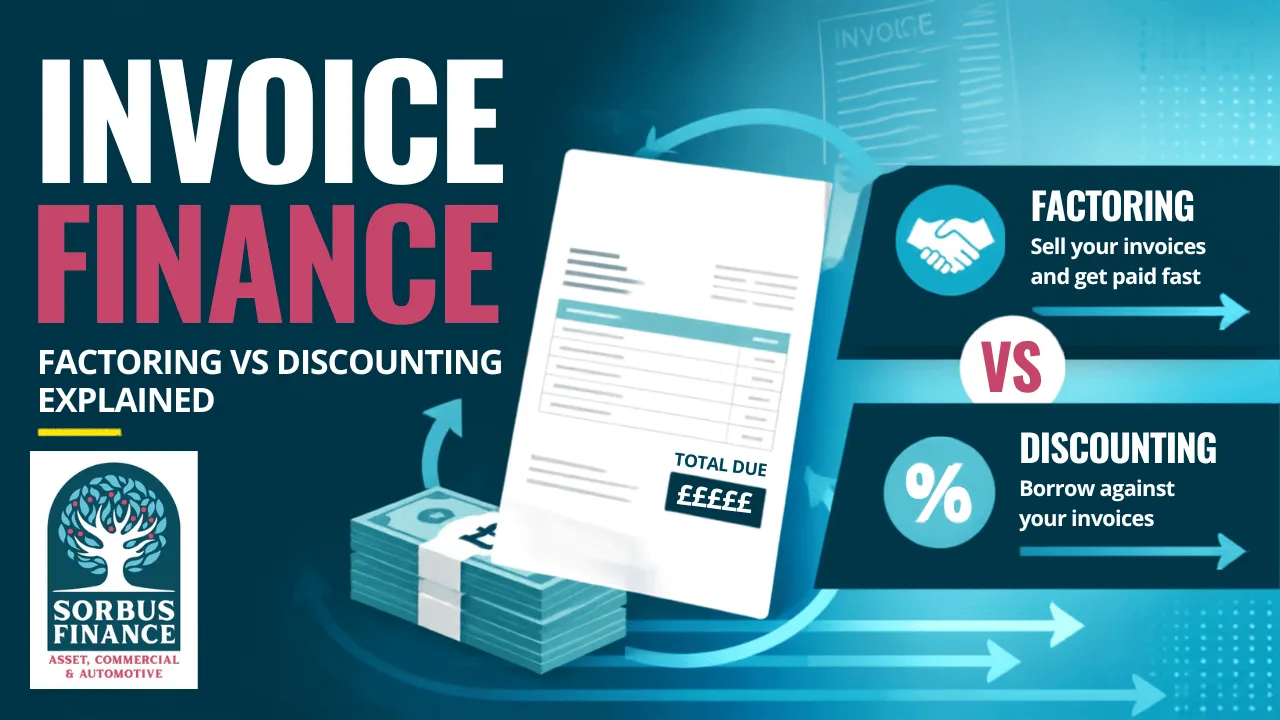
What Is Invoice Finance? Invoice Factoring vs Invoice Discounting Explained
Meta title: What Is Invoice Finance? Invoice Factoring vs Invoice Discounting Explained
Meta description: Learn what invoice finance is, how invoice factoring differs from invoice discounting, and which option may suit your business cash flow needs.
Keyword: invoice finance
If you run a business that invoices customers on credit terms, cash flow can become strained even when sales are healthy. This is where invoice finance can help, by releasing money tied up in unpaid invoices so you can keep trading with more confidence.
In simple terms, invoice finance allows a business to access a portion of the value of its unpaid invoices before the customer actually pays. Instead of waiting 30, 60 or even 90 days for payment, you can turn outstanding invoices into working capital sooner. For many businesses, that can make the difference between steady growth and constant pressure on cash.
What is invoice finance?
Invoice finance is a funding solution based on money owed to your business by customers. Rather than lending against property, stock or other assets, the finance provider looks at your sales ledger and advances funds against approved invoices.
This makes it especially useful for businesses that have already completed the work, issued the invoice and are simply waiting to be paid. It is not the same as a traditional bank loan. With invoice finance, the amount available usually rises and falls with your sales, which can make it a flexible form of funding.
The core benefit is straightforward. You do not have to wait for slow-paying customers before you can use the money your business has already earned. That can support payroll, supplier payments, tax bills, stock purchases and general day-to-day operations.
How invoice finance works
The process is usually quite simple. Once you deliver goods or services and issue an invoice, the finance provider checks the invoice and advances a percentage of its value, often within a short time. When your customer pays the invoice, the lender releases the remaining balance, minus fees and charges.
The exact structure depends on the type of invoice finance agreement you choose. The two main forms are invoice factoring and invoice discounting. They both unlock cash from unpaid invoices, but they work in different ways and suit different types of businesses.
For this reason, it is important not to treat all invoice finance as the same product. Understanding how each option operates will help you choose a facility that fits your cash flow needs and your relationship with customers.
Invoice factoring explained
Invoice factoring is a form of invoice finance where the provider advances cash against your unpaid invoices and typically takes responsibility for collecting payment from your customers. In practice, the lender becomes involved in the credit control process, which can reduce the amount of administration your business has to manage.
This can be helpful if your team is busy, your back office is small or you would prefer to focus on sales and delivery rather than chasing overdue accounts. Many growing businesses value that support because it frees up time and can improve the consistency of collections.
There is, however, an important trade-off. Because the factor is often the one contacting your customers about payment, the arrangement may be visible to them. For some businesses, that is not a problem. For others, especially those that want to keep funding arrangements private, it can be less appealing.
Factoring is often used by smaller and mid-sized businesses that want a practical cash flow solution and are comfortable outsourcing part of their credit control. It can be especially useful where a business invoices a wide range of customers and needs help managing debt collection efficiently.
Invoice discounting explained
Invoice discounting is another type of invoice finance, but it is usually more discreet. With invoice discounting, the business continues to manage its own sales ledger and collect payment from customers, while the lender advances funds against the invoices in the background.
This means your customers may not know that you are using invoice finance, which is one reason many established businesses prefer this option. It allows them to maintain direct control over customer relationships and credit control processes.
Invoice discounting tends to suit businesses with stronger internal finance teams and a reliable invoicing process. Because the company remains responsible for collecting payment, the lender will expect good systems, accurate records and disciplined cash management.
It can be a strong fit for businesses that want flexibility without handing over customer contact. If confidentiality matters and you already have the processes in place to manage receivables well, invoice discounting may be the better option.
Invoice factoring vs invoice discounting
Although both products sit under the umbrella of invoice finance, the main difference is who manages collections and how visible the arrangement is to your customers.
With factoring, the lender usually handles collections and credit control. With discounting, your business continues to manage customer payments. Factoring is generally more hands-on from the provider’s side, while discounting gives the business more autonomy.
From a practical perspective, factoring may suit businesses that want support and simplicity. Discounting may suit businesses that want discretion and control. Both can improve cash flow, but the best choice depends on how your business operates and what level of involvement you want from the funder.
It is also worth considering the nature of your customer base. If you work with many smaller customers and want help chasing invoices, factoring may be easier. If you work with larger customers and want to preserve direct relationships, discounting may be a better fit.
Benefits of invoice finance
The main advantage of invoice finance is faster access to cash. That alone can improve stability, especially for businesses that are growing quickly but still waiting to be paid on long terms.
It can also help smooth out the ups and downs of trading. Even profitable businesses can run into pressure if cash is tied up in unpaid invoices. Invoice finance helps bridge that gap, so you can pay staff, suppliers and overheads without waiting for every customer to settle.
Another benefit is flexibility. Because funding is linked to sales, the facility can often grow as your invoicing increases. That can make it more responsive than a fixed loan in situations where business activity is changing month to month.
For some businesses, invoice finance also reduces stress. Late payments can create uncertainty and make planning difficult. Knowing that you can access a portion of invoice value early can give you more confidence in day-to-day decision-making.
Things to consider before choosing invoice finance
Invoice finance is useful, but it is not the right solution for every business. Fees, customer concentration, invoice quality and internal processes all matter.
You should consider how reliable your customers are, because finance providers will look closely at who owes you money and how likely those debts are to be paid. Businesses with strong, creditworthy customers are usually in a better position to use invoice finance effectively.
You should also think about the cost. Fees will vary depending on the provider, the type of facility and the risk involved. While invoice finance can improve liquidity, it is still important to weigh the cost of the facility against the benefit of getting paid sooner.
Another key factor is your internal process. If your invoicing is inaccurate or slow, the facility may not work smoothly. Clean records, prompt invoicing and clear credit control make a big difference to how effective invoice finance will be.
Who should use invoice finance?
Invoice finance is often suitable for businesses that sell on credit and experience delays between doing the work and getting paid. That includes many companies in recruitment, manufacturing, logistics, construction, wholesale and business services.
It can be particularly helpful for growing businesses that are winning more work but do not yet have the cash reserves to support that growth. In those cases, invoice finance can provide the working capital needed to keep up with demand.
It may also suit businesses that want to avoid taking on conventional debt. Because the funding is linked to invoices already issued, many owners see it as a more practical and revenue-driven source of finance.
That said, if your business mainly sells on immediate payment terms, invoice finance may not be necessary. It tends to work best where unpaid invoices are a regular and predictable part of trading.
Final thoughts
Invoice finance is a practical way to unlock cash tied up in unpaid invoices and improve working capital. For businesses that trade on credit terms, it can provide breathing space, reduce cash flow pressure and support growth.
The difference between invoice factoring and invoice discounting comes down to control and visibility. Factoring includes more support with collections, while discounting keeps customer contact in your hands. Both are useful forms of invoice finance, but each suits a different type of business.
If you are choosing between them, focus on three things: how much control you want, how important confidentiality is, and how strong your internal credit control systems are. Making the right choice can improve cash flow without putting unnecessary strain on your business.
FAQ
What is invoice finance?
Invoice finance is a way for businesses to unlock cash tied up in unpaid invoices before customers pay them. It helps improve cash flow by turning outstanding invoices into working capital sooner.
How does invoice finance work?
A finance provider advances a percentage of the invoice value, then releases the balance when the customer pays, minus fees. The exact process depends on whether you choose invoice factoring or invoice discounting.
What is the difference between invoice factoring and invoice discounting?
Invoice factoring usually means the lender manages customer collections, while invoice discounting lets your business keep control of payment chasing. Factoring is more visible to customers, whereas discounting is generally confidential.
Is invoice finance the same as a loan?
No, invoice finance is not the same as a traditional loan. It is based on money owed to your business through unpaid invoices rather than borrowing against property or other assets.
Who is invoice finance suitable for?
It is often suitable for businesses that invoice other businesses and have to wait for payment. It can be especially useful for growing companies, seasonal businesses, and firms with regular cash flow gaps.
Does invoice finance affect customer relationships?
It can, depending on the type you choose. With factoring, customers may deal with the finance provider, while discounting usually keeps customer contact with your business.
What are the main benefits of invoice finance?
The main benefits are faster access to cash, improved cash flow, and less pressure from slow-paying customers. It can also help businesses cover day-to-day costs and support growth.
Are there fees involved?
Yes, invoice finance comes with fees and charges, which vary by provider and facility type. It is important to compare costs carefully and make sure the benefits outweigh the expense.
Ready to act on what you've read?
Get a free, no-obligation quote from 100+ UK lenders
Ready to find the right finance for your business?
Our independent advisers compare 100+ UK lenders to find the deal that fits your business, no upfront fees, no obligation.